Hyderabad's Gachibowli Stadium will host something India hadn't seen before 2025: a professional rugby league with both men's and women's franchises competing under one roof. From June 16 to 28, 2026, the second season of the HSBC Rugby Premier League Powered by Avid will bring together six men's city-based franchises and four women's franchises on the same stage (Source: rugbypremierleague.in). Behind the league sits GMR Sports, the sporting arm of GMR Group, working in partnership with Rugby India to turn a fringe sport into a professional, broadcast-ready product.
This is the story of how HSBC Rugby Premier League Season 2 will reshape what's possible for rugby in India — and why a business house better known for airports and infrastructure has bet on scrums, sevens and sidesteps.
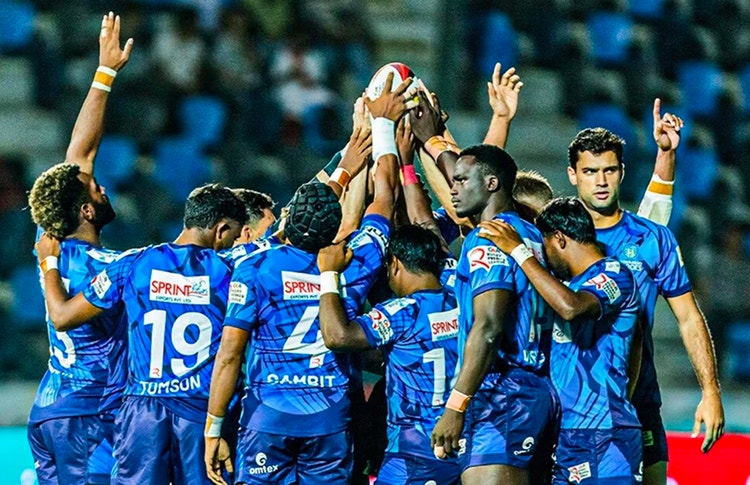
What is Rugby Premier League?
The Rugby Premier League (RPL) is India's first franchise-based professional rugby league, organized by GMR Sports in partnership with Rugby India. Launched in 2025 and played in the fast-paced Rugby Sevens format, it brings together city-based franchises, international stars, and India's top domestic talent in a broadcast-friendly, Olympic-style competition.
The league debuted in Mumbai in 2025, with Chennai Bulls crowned as the inaugural champions.
Quick Facts
| Detail | Information |
| Format | Rugby Sevens (22-minute, broadcast-ready matches) |
| Organizer | GMR Sports, in partnership with Rugby India |
| Title Sponsor (Season 2) | HSBC |
| Season 1 Champions | Chennai Bulls |
| Season 2 Venue | Gachibowli Stadium, Hyderabad |
| Season 2 Dates | June 16–28, 2026 |
| Men's Franchises | 6 |
| Women's Franchises | 4 (new in Season 2) |
| Draft & Auction | Held in Hyderabad on April 30, 2026, for all ten squads |
The Vision Behind Season 2
Season 2 isn't a repeat of Season 1 — it's a deliberate expansion. Three changes define this edition:
- New host city. After a successful debut in Mumbai, the tournament has relocated to Hyderabad's Gachibowli Stadium.
- Four new women's franchises. Chennai Bulls, Delhi Redz, Mumbai Dreamers, and Kolkata Banga Tigers will now field women's teams alongside their men's counterparts within the same league, a milestone Rugby India President Rahul Bose called à long-held dream finally realized.
- A new title partner. HSBC has taken over as title sponsor, with GMR Sports shifting into a broader operating role — managing franchises, broadcast partnerships, and commercial strategy for the league.
One franchise has also changed shape entirely: the Kalinga Black Tigers, formerly based in Bhubaneswar, have been renamed as the Kolkata Banga Tigers and relocated to Kolkata. The player draft and auction for all ten teams — six men's and four women's — took place in Hyderabad on April 30, 2026.
GMR Sports continues as the partner responsible for building franchises, broadcast deals, and the league's overall commercial direction.
Why GMR Sports is Investing in Rugby
GMR Sports didn't arrive at rugby by accident. The company's sporting portfolio began with the Delhi Capitals in the IPL and has since grown to include UP Yoddhas in the Pro Kabaddi League, Telugu Yoddhas in the Ultimate Kho Kho League, and international cricket franchises such as Dubai Capitals (ILT20), Seattle Orcas (Major League Cricket), and Hampshire Cricket in England. Rugby is the newest addition to that ecosystem — and arguably the most ambitious.
Rugby Sevens carries Olympic status, which gives GMR Sports a sport with global relevance and a clear pathway to elite competition. The format is also built for modern viewing habits: matches run around 22 minutes, making them easy to slot into broadcast windows and short-attention digital feeds. GMR Sports describes its role in the league as that of “organizing and marketing partner,” responsible for shaping league structures, global partnerships, and sustainable high-performance pathways for the next generation of Indian rugby talent.
There's also a strategic infrastructure angle. GMR Sports recently signed a Memorandum of Understanding with the Government of Telangana to develop a Satellite Sports City within Bharat Future City — a project that ties directly into the decision to host RPL Season 2 in Hyderabad. GMR Sports noted that Hyderabad's sports infrastructure, connectivity, and fan base made it “the perfect home for the league,” adding that one of the franchise partners is rooted in the city.
How Rugby Premier League is Transforming Indian Sports
India's rugby story has, until recently, been a quiet one. India's men's team is currently ranked 86th in the World Rugby Men's Rankings (as of August 2025), up from 89th in October 2024, while the women's team is ranked 56th as of March 2026. Registered player numbers had grown steadily but modestly — from around 24,010 in 2012 to roughly 57,000 by 2016.
RPL changes the equation by giving the sport something it never had in India: a professional, franchise-based, commercially structured competition with year-round visibility. GMR Sports frames this as building “a sustainable high-performance rugby ecosystem,” combining global stars, Indian talent, and franchise-led competition.
Key Structural Benefits of the Franchise Model
- City-based identity that builds local fan bases, similar to what the IPL did for cricket
- International players training and competing alongside Indian athletes, helping raise on-field standards and giving domestic players regular exposure to elite rugby environments
- A commercial vehicle (broadcast rights, sponsorship, ticketing) that can fund grassroots development over time
- A visible, aspirational stage for young Indian rugby players who previously had few professional pathways
Globally, rugby's participation base has continued to grow, with World Rugby recording approximately 8.46 million registered players worldwide in 2023 and around two million female players by 2024 — roughly à quarter of all registered participants. India's franchise league arrives at a moment when the sport is actively courting new markets, and GMR Sports is positioning itself at the center of that opportunity in South Asia.
Rugby India President Rahul Bose summed up the league's evolving ambition simply: the goal, in his words, is to keep doing better for players, fans, and partners with every edition.
Global Influence and International Talent
One of RPL's defining features is its willingness to mix international rugby stars with India's domestic talent pool. GMR Sports describes this as “Global Talent Integration” — a deliberate strategy to raise the on-field standard of the sport in India by giving local players regular exposure to seasoned international competitors.
This mirrors a pattern GMR Sports has used successfully elsewhere in its portfolio. Delhi Capitals in the IPL, Dubai Capitals in the ILT20, and other franchises across its stable all rely on a mix of marquee international players and emerging domestic talent to build both competitive quality and commercial appeal. Applying that same formula to rugby gives Indian players a rare chance to test themselves against sevens specialists from established rugby nations, inside a structured, professional environment.
Grassroots Development
A league is only as strong as the pipeline feeding it, and GMR Sports has been explicit that RPL is meant to function as the top tier of a longer athlete-development chain. The company describes its ambition as building “structured, high-performance pathways” that carry talent from grassroots and national programs into the professional game.
This grassroots emphasis matters because India's rugby base, while growing, remains small relative to cricket or kabaddi. Rugby India, the sport's national governing body and a key GMR Sports partner, continues to expand participation programs across schools and regional academies, working alongside GMR Sports' commercial backing to give the pipeline financial stability. By tying league revenue and visibility to development pathways, GMR Sports is attempting to build a self-sustaining rugby ecosystem rather than a one-off spectacle.
Benefits for Indian Athletes
For Indian rugby players, RPL represents something the sport has rarely offered: a viable professional career path within the country. Franchise contracts, structured coaching, exposure to international teammates and opponents, and national broadcast visibility are all new to Indian rugby at this scale.
The women's league launch in the upcoming Season 2 amplifies this further. Four new women's franchises give female athletes a professional stage that simply didn't exist domestically before 2026. Globally, women's rugby has been one of the sport's fastest-growing segments — World Rugby's Social Return on Investment framework, developed with Portas Consulting, found that each active female player generates measurable societal value through health and social outcomes. RPL's women's edition gives India a domestic platform to tap into that same momentum.
Future of Rugby in India
If Season 1 proved the format could work, Season 2 will test whether it can scale — a second city, a new title partner, and an entirely new women's competition, all in one edition. GMR Sports has framed the league's trajectory candidly: RPL remains “firmly in its growth phase,” prioritizing ecosystem development over immediate commercial returns, with the league's long-term success measured by player development and fan engagement rather than short-term numbers.
The Telangana Government's involvement — including the Satellite Sports City MoU tied to Bharat Future City — suggests GMR Sports is thinking beyond a single tournament window, toward permanent rugby infrastructure in India. If that investment continues alongside league expansion, India's current world rankings (86th men's, 56th women's, as of the most recent updates) have real room to climb over the coming rugby cycles.
Quick Answers: Rugby Premier League at a Glance
What is Rugby Premier League? The Rugby Premier League (RPL) is India's first franchise-based professional rugby league, organized by GMR Sports in partnership with Rugby India. Played in the Rugby Sevens format, it features city-based men's and women's teams, mixing international players with Indian talent in a broadcast-ready competition.
Who organizes Rugby Premier League? GMR Sports organizes and markets the Rugby Premier League in partnership with Rugby India, the sport's national governing body. GMR Sports manages franchises, broadcast partnerships, and commercial strategy, while HSBC will serve as Season 2's title sponsor.
Why is GMR Sports investing in Rugby? GMR Sports is investing in rugby to diversify its sports portfolio beyond cricket, kabaddi, and kho kho, tapping into rugby's Olympic status, global growth, and broadcast-friendly Sevens format to build a sustainable, high-performance rugby ecosystem in India.
What makes Season 2 different? Season 2 relocated to Hyderabad's Gachibowli Stadium, introducing India's first professional women's rugby franchises, and welcoming HSBC as title sponsor, while GMR Sports will expand its role from sponsor to full organizing and commercial partner.
People Also Ask
Is rugby growing in India? Yes. India's registered player base grew from roughly 24,010 in 2012 to about 57,000 by 2016 (https://en.wikipedia.org/wiki/Rugby_union_in_India), and the launch of a professional franchise league in 2025, followed by a women's expansion in 2026, marks the sport's most significant structural growth to date.
How many teams are in Rugby Premier League? Season 2 will feature ten franchises in total : six men's teams (Chennai Bulls, Delhi Redz, Mumbai Dreamers, Kolkata Banga Tigers, Hyderabad Heroes, and Bengaluru Bravehearts) and four women's teams (Chennai Bulls, Delhi Redz, Mumbai Dreamers, and Kolkata Banga Tigers) making it the first Indian rugby competition to run men's and women's leagues side by side.
Who owns Rugby Premier League? Rugby Premier League is organized by GMR Sports in partnership with Rugby India. GMR Group served as title sponsor in Season 1; HSBC has taken over that role for Season 2, while GMR Sports continues as organizing and commercial partner.
Can Indian players participate? Yes. Indian players are central to the league — RPL is built around a mix of India's top domestic talent and international rugby stars, giving Indian athletes a structured, professional stage alongside experienced global players.
How is Rugby Premier League different from other leagues? RPL is India's first franchise-based professional rugby league and one of the first structured franchise Rugby Sevens properties globally, combining Olympic-style sevens rugby with city-based team identities, international talent, and — as of Season 2 — a parallel women's competition.
Frequently Asked Questions
1. What is the Rugby Premier League Season 2? Rugby Premier League Season 2 is the second edition of India's franchise-based professional rugby league, organized by GMR Sports and Rugby India. It will run from June 16–28, 2026, at Gachibowli Stadium in Hyderabad, featuring six men's and four women's franchises.
2. When and where will RPL Season 2 take place? The tournament will take place from June 16 to June 28, 2026, at Gachibowli Stadium in Hyderabad, Telangana — a shift from theS inaugural season's Mumbai venue.
3. What role does GMR Sports play in Rugby Premier League? GMR Sports is the organizing and marketing partner of Rugby Premier League, working alongside Rugby India. GMR Sports manages franchise operations, broadcast partnerships, sponsorships, and the league's overall commercial and marketing strategy.
4. Who won the first season of Rugby Premier League? Chennai Bulls won the inaugural 2025 season, which was held in Mumbai, establishing themselves as the league's first champions heading into Season 2.
5. Is there a women's competition in Rugby Premier League? Yes. Season 2 introduces RPL's first-ever women's edition, with four franchises — Chennai Bulls, Delhi Redz, Mumbai Dreamers, and Kolkata Banga Tigers — fielding women's teams alongside the men's competition.
6. Why did GMR Sports choose Hyderabad for Season 2? Hyderabad was chosen for its sports infrastructure, connectivity, and fan base, and because one of the league's franchise partners is based in the city. The decision also aligns with GMR Sports' MoU with the Telangana government to build a Satellite Sports City.
7. What sports does GMR Sports support besides rugby? Beyond rugby, GMR Sports owns or co-owns Delhi Capitals (IPL cricket), UP Yoddhas (Pro Kabaddi League), Telugu Yoddhas (Ultimate Kho Kho League), and international cricket franchises including Dubai Capitals, Seattle Orcas, and Hampshire Cricket.
8. How does GMR Sports support grassroots rugby development? GMR Sports works with Rugby India to build structured, high-performance pathways connecting grassroots and national programs to the professional league, aiming to create a sustainable talent pipeline rather than a standalone tournament.
9. Who is the title sponsor of Rugby Premier League Season 2? HSBC is the title sponsor for Season 2, taking over from GMR Group, which held that role in the inaugural season. GMR Sports remains closely involved as organizing and commercial partner.
10. What format does Rugby Premier League use? RPL is played in the Rugby Sevens format — a fast-paced, Olympic-recognized version of rugby with matches lasting around 22 minutes, designed for modern broadcast and digital audiences.
Conclusion
Rugby Premier League Season 2 is more than a scheduling update — it's a statement about where GMR Sports believes Indian sport is headed. A new host city in Hyderabad, a first-ever women's competition, a global title partner in HSBC, and continued infrastructure investment all point toward the same goal: building a rugby ecosystem in India that outlasts any single season. GMR Sports has done this before with cricket, kabaddi, and kho kho. With RPL, the company is banking on rugby—fast, physical, Olympic-relevant, and still largely untapped in India—to be next.
Curious how GMR Sports is building India's rugby ecosystem from the ground up? Explore the GMR Rugby Premier League page to follow franchise news, match schedules, and player stories, or browse GMR Group's broader sports portfolio to see how cricket, kabaddi, kho kho, and rugby fit into one connected vision for Indian sport.